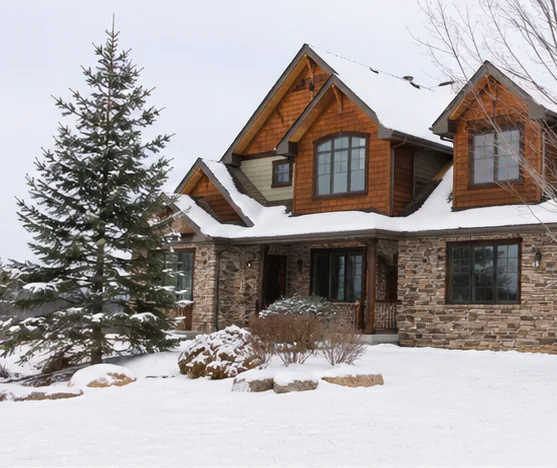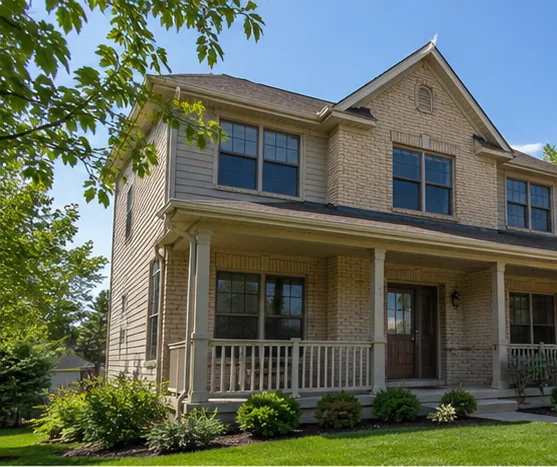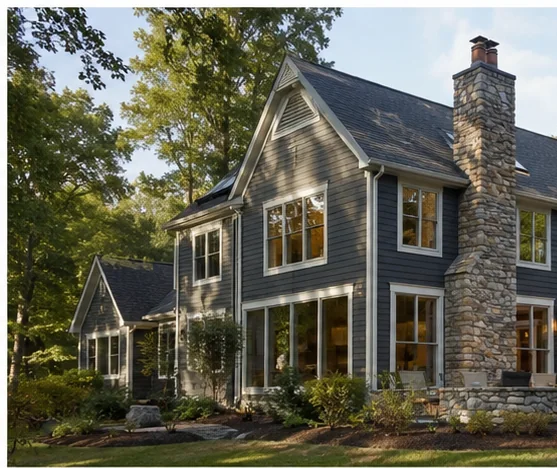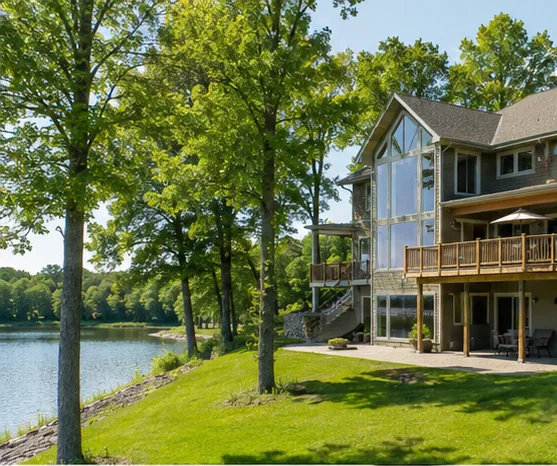
A two-story home is the workhorse of Marshall's established neighborhoods and its newer subdivisions on the edges of town. As the regional hub of southwest Minnesota, Marshall has homes that span generations, from older two-stories built closer to downtown and the Southwest Minnesota State University area to newer builds going up on the prairie's open edges. The two-story layout brings its own inspection priorities. Because the living space is stacked, problems travel vertically: a roof issue shows up as a stain on a second-floor ceiling, then again on the main floor. A settling foundation telegraphs all the way up through stacked door frames and stair landings. And on a flat, wind-scoured prairie like Lyon County's, that tall profile catches every gust and every hailstorm that rolls in. This page walks through what we actually look at when we inspect a two-story home in and around Marshall, in plain language and with no fabricated numbers.
A taller profile in open prairie wind
Marshall sits in flat, open country where there is little to break the wind coming across the fields. A two-story home presents far more wall surface to that wind than a ranch or rambler does, and over years the loading shows up in real ways. We check siding and trim on the exposed sides for loosened fasteners, lifted seams, and wind-driven rain staining behind it. Soffits and gable-end venting take a beating, so we look for crushed or detached soffit panels and for daylight where vents have been pried loose. Tall homes also rely heavily on properly braced and flashed roof-to-wall connections, and we inspect those transitions where the second-story walls meet the lower roof sections. If gutters and downspouts are undersized or pulling away near the upper roofline, wind-driven water tends to find its way behind the fascia, so that gets a close look too.
Roof and hail damage you cannot see from the ground
Southwest Minnesota gets its share of severe summer storms, and hail is a recurring reality for Lyon County roofs. On a two-story home the roof is high and steep enough that homeowners rarely get a clear look at it, which means hail bruising, cracked or missing tabs, and granule loss can sit unnoticed for years until a leak appears. We assess the roof covering as thoroughly as conditions safely allow and note signs of past hail strikes, prior repairs, and patched areas that suggest a storm claim. We also pay attention to whether an older roof has been layered over rather than torn off, since a heavy or aging upper roof on a two-story carries water a long way before it reaches the ground. Flashing around the tall chimney and any second-story dormers is a common leak point and gets specific attention.
How water and air move through a stacked house
Because a two-story home stacks living space, plumbing and HVAC runs are long and vertical, and small problems compound. We trace second-floor bathrooms and laundry for signs of slow leaks at supply lines and drains, because a drip up high can quietly damage the main-floor ceiling and wall cavities below before anyone notices. We look at how the heating and cooling system is sized and ducted, since a single furnace and one thermostat often struggle to keep an upstairs comfortable in a Marshall summer or evenly warm in January. Uneven temperatures between floors usually point to duct, return-air, or insulation issues we can document. We also check that bath and kitchen exhaust fans actually vent to the outside rather than dumping moist air into the attic, which on a tall home accelerates the next concern.
Ice dams, attic, and the upper ceilings
Minnesota winters make ice dams a genuine threat, and a two-story home gives ice plenty of roof to form on. The pattern is familiar: warm air leaks into the attic, melts the underside of the snowpack, and the meltwater refreezes at the cold eaves, backing water up under the shingles. We inspect the attic for adequate insulation depth, for air-sealing around can lights and the top of interior walls, and for clear, unobstructed soffit-to-ridge ventilation. We document staining at the upper-level ceilings and at the eaves that points to past ice-dam intrusion. On older Marshall two-stories especially, the original insulation is often thin by today's standards, and we explain in plain terms what we see so you can weigh the cost of improving it.
Stairs, structure, and the vertical load path
In a two-story home the weight of the upper floor and roof rides down through walls, beams, and posts to the foundation, and we follow that load path. In the basement we look at the main carrying beam, support posts, and the foundation walls for cracking, bowing, or shifting that an upper floor's weight can aggravate. We check that the stairway between floors is safe and code-reasonable for its age, with a graspable handrail, sound treads, and railings that are not loose. Sticking doors, sloping floors, and gaps opening at trim on the second level are clues we connect back to settlement or framing movement below. Older homes near the established parts of Marshall sometimes have additions or a finished upper level done over time, and we note where that work was permitted-looking and properly tied in versus where it was improvised.
Wells, septic, and radon on the edges of town
Many two-story homes around Marshall sit on larger lots or on farm-adjacent acreage in surrounding communities like Lynd, Ghent, and Cottonwood, where municipal water and sewer give way to private wells and septic systems. A standard home inspection is visual and does not replace a dedicated well-water test or a licensed septic compliance inspection, and we will tell you clearly when those specialized tests are worth ordering. We also recommend radon testing on every Marshall-area home regardless of style; this part of Minnesota has elevated radon potential, and a two-story's stack effect can actually pull more soil gas up through the lowest level. We point out where a radon mitigation system already exists and whether it appears to be running.
What we watch for
- Hail bruising, granule loss, and cracked shingles on the high, steep roof, plus flashing at the chimney and dormers
- Wind-loosened siding, lifted trim, and damaged soffits or gable vents on the exposed prairie-facing walls
- Ceiling and wall stains that trace second-floor plumbing or bathroom leaks down into the main floor
- Attic insulation depth, air-sealing, and soffit-to-ridge ventilation tied to ice-dam history at the eaves
- HVAC sizing and duct balance that leaves the upstairs too hot in summer or cold in winter
- Foundation walls, the main carrying beam, and support posts that bear the stacked load above
- Stairway safety: graspable handrails, sound treads, and secure railings between floors
- Sloping floors, sticking doors, and trim gaps that point to settlement or framing movement
- Private well, septic, and radon conditions on farm-adjacent lots, with clear notes on when added testing is warranted
Buying or selling a two-story home in Marshall or the surrounding Lyon County towns? See why local homeowners trust us by reading our Google reviews, then build your free instant quote online in just a couple of minutes. No phone call needed to get started, and you will have your detailed inspection report within 24 hours of the walkthrough.
Build Your Instant Quote