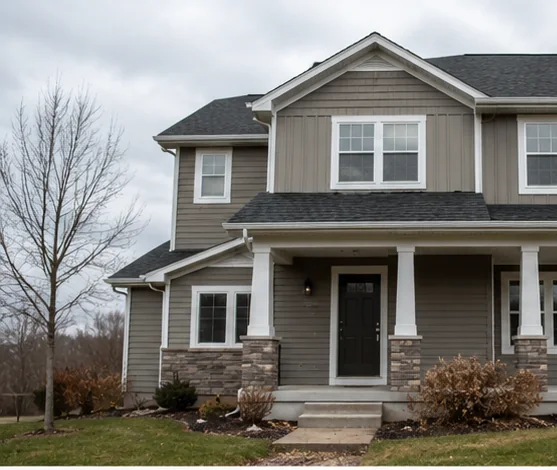
If you own or are buying a home in Marshall or anywhere across Lyon County, radon deserves a permanent spot on your maintenance radar. Southwest Minnesota sits in one of the highest radon-potential zones in the country, and the prairie soil under our feet is a big reason why. This guide explains what radon is, why Lyon County homes test high so often, how the gas interacts with the rest of our regional housing stock, and what a Marshall homeowner can actually do about it. No scare tactics, no fabricated numbers, just plain-English guidance built around the conditions we see in homes from the Lyon County Courthouse neighborhoods out to the farm-adjacent acreages around Ghent, Cottonwood, and Minneota.
In this guide
Why Lyon County Is High-Radon CountryHow Radon Enters Marshall Homes Through the FoundationTesting: The Only Way to Know Your NumberRadon in the Context of Our Regional Housing StockMitigation: What Actually Lowers Your LevelBuying or Selling in Marshall: Radon and the TransactionWhy Lyon County Is High-Radon Country
Radon is a colorless, odorless radioactive gas produced when uranium in soil and rock breaks down. It seeps up through the ground and accumulates inside buildings. The Minnesota Department of Health classifies the entire state as high-radon, and southwest Minnesota counties, including Lyon, consistently land in the elevated tiers. The reason is geology: the glacial till and fine prairie soils beneath Marshall are rich in the parent materials that generate radon, and our cold climate means homes stay sealed up and pressurized for months at a time, pulling soil gas indoors through the path of least resistance. The EPA action level is 4.0 picocuries per liter (pCi/L), and a large share of Minnesota homes test at or above that threshold. In Lyon County it is genuinely common to see homes in the elevated range, including newer construction. Radon does not care whether your house is a century-old Victorian near downtown or a 2015 build on the edge of town. It is the single most preventable cause of lung cancer among non-smokers, which is exactly why it earns its own conversation rather than a footnote in a general inspection summary.
How Radon Enters Marshall Homes Through the Foundation
Radon follows air pressure and cracks. In a typical Marshall home, the lower level is slightly depressurized relative to the soil, especially in winter when furnaces, dryers, and the stack effect pull air upward and out. That pressure difference draws soil gas in through any opening below grade: hairline cracks in poured-concrete basement walls, gaps around the sump pit, the joint where the floor slab meets the foundation wall, unsealed plumbing and electrical penetrations, and the porous block of older foundations. Lyon County's freeze-thaw cycles work against you here. Our hard prairie winters and rapid spring thaws flex foundations, opening and widening cracks season after season, which is why a home that tested fine years ago can drift higher over time. Homes with fieldstone or concrete-block basements, common in older Marshall and the surrounding small towns, tend to be leakier to soil gas than modern poured walls. Crawl spaces with exposed dirt floors, frequent on older rural and farm-adjacent properties, can act like an open invitation. Understanding the entry pathways matters because mitigation works by reversing that pressure relationship, not by chasing individual cracks.
Testing: The Only Way to Know Your Number
You cannot see, smell, or feel radon, and you cannot estimate your level from your neighbor's result. Two homes on the same Marshall block can read very differently depending on foundation type, sealing, and how the home is operated. That makes testing the only reliable answer. The most common starting point is a short-term test, typically a charcoal or electret kit left in the lowest livable level for several days under closed-house conditions, which is why winter is an ideal testing season here. Long-term tests run for months and give a truer annual average, because radon levels swing with weather, frost depth, and how sealed-up the house is. During a real estate transaction, a continuous radon monitor placed by a measurement professional gives a documented, tamper-resistant result on a tighter timeline. If your short-term result lands near or above 4.0 pCi/L, the standard guidance is to confirm with a second test before committing to mitigation. Free and low-cost kits are periodically available through the Minnesota Department of Health and county channels, so testing is rarely a budget obstacle. The mistake to avoid is assuming a newer or recently sold home was handled. Always ask for documentation and test on your own terms.
Radon in the Context of Our Regional Housing Stock
Radon rarely shows up alone. Marshall and Lyon County housing spans a wide range: pre-war homes near the core, mid-century ranches, rural farmsteads, and newer subdivisions, each with its own quirks that interact with radon and with the other issues prairie homes face. Wind-driven hail off the open landscape batters roofs hard out here, and a compromised roof or attic ventilation problem changes how a house breathes, which in turn affects the stack effect that pulls radon upward. Ice dams, a perennial southwest Minnesota headache, signal attic heat loss and air leakage, the same air movement that helps draw soil gas indoors. Aging mechanicals matter too: an oversized or poorly balanced furnace, an old atmospheric water heater, or leaky ductwork in the basement all influence basement pressure. On rural and farm-adjacent acreages with well and septic systems, an unsealed sump, a dirt-floor crawl space, or an open well pit can be both a moisture path and a radon path. None of these problems cause radon, but they share root mechanisms, which is why a thorough home inspection looks at the whole system rather than treating radon as an isolated checkbox.
Mitigation: What Actually Lowers Your Level
The proven fix for an elevated reading is an active sub-slab depressurization system. In plain terms, a contractor cuts a small hole through the basement slab, draws air from beneath the foundation through a sealed PVC pipe, and vents it above the roofline using a continuously running inline fan. By keeping the soil under your slab at lower pressure than the basement, the system intercepts radon before it ever enters living space. A properly installed system in a Marshall-area home typically brings levels well below the action threshold, often dramatically so. Cost depends on factors rather than a single sticker price: foundation type, whether you have a slab, basement, crawl space, or a combination, the run length for the vent pipe, sump configuration, and how accessible the routing is. Homes with multiple foundation types, such as an older house with a basement plus an added crawl space, take more work. Sealing major cracks and covering exposed crawl-space soil with a sealed membrane supports the system but is not a substitute for it. After installation, always retest to confirm the system is performing, and look for the small manometer gauge on the pipe that lets you verify at a glance that the fan is still pulling.
Buying or Selling in Marshall: Radon and the Transaction
Minnesota law requires sellers to provide buyers with a radon disclosure and an informational publication before signing a purchase agreement. That does not mean a test was performed, only that the topic was disclosed, so the responsibility to know the actual number still falls to the buyer. If you are buying in Marshall or the surrounding communities, build a radon measurement into your inspection period rather than skipping it to save a few days. If the home already has a mitigation system, treat that as a positive but verify it: confirm the fan runs, check the manometer, ask for the post-mitigation test result, and have the routing reviewed. If you are selling, a recent passing test or an installed system removes a common point of negotiation friction and signals that the home has been cared for. Either way, document everything. Radon is one of the few home-health issues with a clear, affordable test and a reliable fix, which makes it one of the easiest items to resolve cleanly during a transaction rather than letting it stall a deal at the closing table.
Quick checklist
- Test your lowest livable level with a short-term kit under closed-house conditions, ideally in winter, and confirm any elevated result with a second test before acting
- If your average is at or above 4.0 pCi/L, plan for an active sub-slab depressurization system installed by a qualified mitigation contractor
- Seal obvious soil-gas entry points: sump pit covers, slab-to-wall joints, plumbing penetrations, and exposed crawl-space dirt floors
- Cover exposed crawl-space soil on rural or older properties with a sealed membrane to cut both radon and moisture intrusion
- After any mitigation install, retest to confirm performance and check the manometer gauge periodically to verify the fan is still running
- During a purchase, schedule a radon measurement within your inspection period instead of relying on the seller's disclosure alone
- If a home already has a system, verify the fan, gauge, vent routing, and ask for the post-mitigation test result
- Re-test every few years and after major foundation, mechanical, or basement remodeling work, since levels drift over time
Radon is one of the few home-health risks you can measure clearly and fix permanently, and getting an honest read on your Marshall-area home is the first step. See what your Lyon County neighbors say about working with us by reading our Google reviews, then build a free, no-obligation instant quote online in just a couple of minutes. No phone calls, no pressure, just clear information and a straightforward path to peace of mind for your home.
Build Your Instant Quote