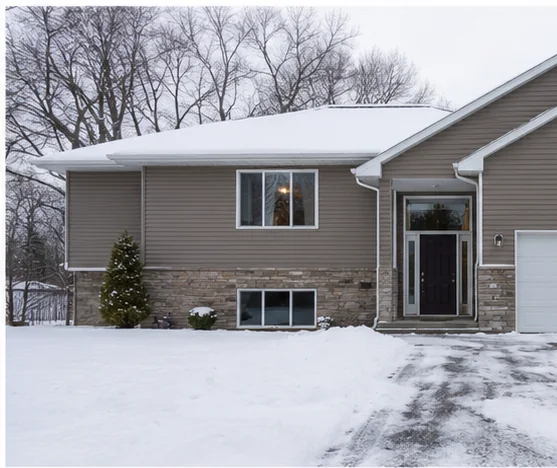
Buying a brand-new home in Marshall feels different from buying a resale, and it should be inspected differently too. New construction does not mean flawless construction. As the regional hub of southwest Minnesota and the seat of Lyon County, Marshall has steady demand for new builds on the edges of town, in newer subdivisions, and on rural and farm-adjacent lots out toward the prairie. Every one of those homes is assembled by people working on deadlines, in Minnesota weather, on a freshly disturbed lot. This guide walks you through how to protect yourself across the entire new-construction timeline, from the pre-drywall stage through your final walkthrough and the critical eleven-month warranty inspection, with the prairie conditions that make a Marshall build unique kept front and center.
In this guide
Why a New Marshall Build Still Needs an Independent InspectionThe Pre-Drywall Inspection: Catch It Before It Is BuriedPrairie Wind, Hail, and the Roof Over a Brand-New Marshall HomeWells, Septic, and Mechanicals on Rural and Farm-Adjacent BuildsThe Final Walkthrough and Punch List Before You CloseThe Eleven-Month Warranty Inspection: Your Most Valuable DeadlineWhy a New Marshall Build Still Needs an Independent Inspection
There is a persistent myth that a new home does not need an inspection because the city already checked it. Municipal inspections in Marshall confirm a build meets minimum code at specific milestones, but a code inspector is not walking through on your behalf, and the items they verify are not the same as the quality, fit, and finish you are paying for. Builders work fast, subcontractors rotate through, and the trades rarely see each other's work. A plumber may not notice that the framer left a structural notch; the drywall crew may bury an unsealed duct. None of those are malicious, but all of them cost you later. An independent inspector answers to you, not the builder, and has no incentive to rush past a problem to keep a schedule on track. In a market like Marshall, where many buyers are relocating for Southwest Minnesota State University, the regional medical and ag economy, or a job with one of the area's larger employers, you may be purchasing from a distance and relying entirely on someone else's eyes. That is precisely when a neutral set of eyes earns its keep. An inspection on a new home is not an accusation against your builder. It is documentation, leverage, and peace of mind, captured while everything is still fresh and the warranty clock has barely started.
The Pre-Drywall Inspection: Catch It Before It Is Buried
The single most valuable inspection on a new build is the one almost nobody orders: the pre-drywall walk. Once insulation and sheetrock go up, the bones of the house disappear forever. Before that happens, an inspector can see the framing, the foundation walls, the rough plumbing, the electrical runs, the HVAC ductwork, and the way the whole shell is tied together. On a Marshall lot this stage matters more than most buyers realize, because southwest Minnesota's deep frost line means foundations and footings have to be right, and freshly poured concrete on a recently graded prairie lot needs proper drainage and backfill before the grade settles. At pre-drywall an inspector looks for cut or over-notched joists, missing fasteners and connectors, gaps in the air and vapor barriers that matter enormously in our cold winters, plumbing that lacks proper support, and duct runs that are crimped or disconnected. This is also the moment to confirm that radon-resistant rough-in is actually present and correct, since Minnesota's residential code requires passive radon controls in new homes and Lyon County sits in a high-radon region. Catching a problem here means the builder fixes it with the wall open, at their cost, instead of you discovering it years later behind finished drywall.
Prairie Wind, Hail, and the Roof Over a Brand-New Marshall Home
A new roof is not automatically a good roof, and southwest Minnesota gives roofs a hard life from day one. The open prairie around Marshall funnels wind, and Lyon County sees its share of summer hail. Your brand-new shingles will face their first real test within months of move-in, so the installation quality matters enormously. During inspection an inspector evaluates whether shingles are nailed correctly and not over-driven or under-driven, whether flashing at valleys, chimneys, and sidewalls is properly integrated, whether the ridge and soffit venting will actually move air, and whether the underlayment and drip edge were installed to shed water rather than trap it. Ventilation deserves special attention here because Minnesota ice dams form when warm attic air melts snow that refreezes at the eaves, and a poorly vented new attic will dam up its very first winter. Just as important, you want to understand the warranty picture before the first storm: the manufacturer's shingle warranty and the builder's workmanship warranty cover different things, and wind and hail claims often run through your homeowner's insurance instead. Knowing where each line falls now, while the roof is pristine and documented, puts you in a far stronger position when the first big system rolls across the prairie.
Wells, Septic, and Mechanicals on Rural and Farm-Adjacent Builds
Plenty of new construction around Marshall sits outside city utilities, on acreages and farm-adjacent parcels where the home depends on a private well and an on-site septic system. A new well and a new septic system are not exempt from scrutiny just because they have never been used. With a new septic system you want confirmation that it was properly sized and sited for the soils on that lot, that setbacks from the well and property lines were respected, and that it was commissioned correctly before the first flush. A new well should be tested for water quality at the source, since brand-new does not guarantee safe; bacteria, nitrates from surrounding ag land, and other contaminants are realities in this region and worth a baseline test you can keep on file. On the mechanical side, the conversation on a new home is about sizing and commissioning rather than age. A furnace or heat pump that is oversized will short-cycle and struggle in our deep-cold stretches; an undersized unit will run flat out. An inspector checks that the heating and cooling equipment was matched to the home, that combustion air and venting are correct, and that the system was actually started up and balanced rather than simply installed and left.
The Final Walkthrough and Punch List Before You Close
The final walkthrough is your last clean shot to have the builder fix things on their dime before you take ownership. Treat it as more than a quick stroll with the construction manager. This is where the cosmetic and functional details that get rushed at the end of a build show up: doors that bind, windows that will not lock, grout and caulk gaps, paint touch-ups, appliances that are not connected, GFCI outlets that do not trip, and grading around the foundation that slopes the wrong way. That last one is a Marshall-specific concern, because a fresh prairie lot will settle, and if the final grade and downspouts are already pushing water toward the foundation, you will be fighting a wet basement before the sod takes root. An inspector turns your walkthrough into a documented punch list rather than a vague memory, photographing each item so there is no dispute later about what was promised. Test every system you can: run the water, cycle the HVAC, open and close everything, and verify that the small finishing items were truly finished. Items captured and signed off before closing get resolved quickly. Items you notice the week after move-in become a slower, more frustrating negotiation.
The Eleven-Month Warranty Inspection: Your Most Valuable Deadline
Most new homes come with a one-year builder warranty on workmanship and materials, and most buyers let that year quietly expire without ever using it. The smartest move you can make as a new-construction buyer in Marshall is to schedule a full inspection at around the eleven-month mark, while the warranty is still in force. A house reveals its real character only after it has lived through a complete cycle of seasons, and in southwest Minnesota that cycle is punishing: a humid summer, a hard freeze, the thaw, and the settling that comes as a new prairie lot compacts. By month eleven you can see whether drywall has cracked at the corners, whether nail pops have appeared, whether doors have shifted out of square, whether the basement has shown any moisture, whether caulking and grout have failed, and whether the grade has settled enough to redirect water at the foundation. You can confirm the HVAC carried the home through both extremes, and whether the radon system needs activation or testing. Everything documented in that eleven-month inspection becomes a warranty claim the builder is obligated to address, instead of a repair bill that lands on you in year two. It is, dollar for dollar, the highest-return inspection a new homeowner can buy.
Quick checklist
- Order a pre-drywall inspection before insulation and sheetrock hide the framing, plumbing, wiring, and ductwork
- Confirm the radon-resistant rough-in required by Minnesota code is present, and plan to test radon after move-in
- Verify foundation footings, backfill, and drainage are correct for southwest Minnesota's deep frost line
- Inspect new roof installation quality and attic ventilation before the first prairie wind, hail, and ice-dam season
- On rural builds, test the new well's water quality and confirm the septic system was properly sized and commissioned
- Check that heating and cooling equipment was correctly sized, vented, and started up for this specific home
- Turn your final walkthrough into a documented, photographed punch list the builder fixes before closing
- Confirm final grading and downspouts push water away from the foundation on the freshly disturbed lot
- Schedule the eleven-month warranty inspection while the one-year builder warranty is still in force
- Keep all inspection reports, water tests, and warranty paperwork together for future claims and resale
Before your new Marshall home gets a single coat of paint, make sure someone independent is looking out for you. See what your neighbors across Lyon County and southwest Minnesota say about us by reading our Google reviews, then build your free instant quote online in just a couple of minutes, no phone call required. Whether you need a pre-drywall walk, a final-walkthrough punch list, or the all-important eleven-month warranty inspection, getting started takes less time than your last builder meeting. Build your free instant quote today and protect your new construction from the foundation up.
Build Your Instant Quote